PIF is an international puppet festival of largely professional puppet theatre groups. It is also a festival for any puppeteer or theatrician who uses puppetry as a means of artistic expression. Until now more than 970 theatres from all continents have participated. The festival is for both adults and children. PIF has been held each year since 1968, so the festival has long tradition behind it. It is usually held in the third week of September. PIF host city is Zagreb, the capital of Croatia.
The PIF was launched curiously. Young and enthusiastic Esperanto promoters gathered at the Student Esperanto Club had been trying since 1967 to organize some cultural events at which Esperanto would be the official language of communication. The most successful was the international puppet theatre festival (Pupteatra Internacia Festivalo) in Esperanto, hence the abbreviation PIF), with four professional and one amateur theatre performing. It was held from 6 to 8 July, 1968 despite an extremely meagre budget. Since then it has been organized every year and sometimes in different towns, thus becoming more than the amateur organization could bear. This is why members of the Esperanto club founded a professional institution – the International Cultural Centre (now Culture Centre Travno) – which became the organizer of PIF in 1972.
PIF has always been open to all forms of puppet expression, puppet techniques, genres, and themes. In the early years, only one requirement – that all plays be performed in Esperanto. However, very soon puppet theatre proved to be stronger than Esperanto and puppets started speaking the national languages of their animators. Above all, they spoke the universal language of puppets understandable by everyone. The Esperanto part of the festival continues to exist, giving a special flavor to the festival and acknowledging gratitude for the enthusiasm and persistence of the founders of PIF.
PIF did not stay in Zagreb. It has traveled to Sisak, Varazdin, Karlovac, Pula, and Ljubljana in Slovenia, as well as to the far north on two occasions when it went to Tromsø in Norway, Zagreb’s twin town. Unfortunately, the geographic distance was too great for the meetings held in 1978 and 1981 to become a permanent form of cooperation.
In 57 years of the festival, more than 970 theatres from more than 55 countries from all continents have taken part. For five to seven days very different plays are performed – from traditional to completely new modern experimental shows – for children and adults. The plays are performed in numerous theatre halls, as well as in the streets and squares of Zagreb. They are observed by two juries: the children’s which observes all plays for children and chooses the best according to their taste, and an international jury of experts which follows all the performances at the festival and presents the main festival prize for the best play in its entirety, while also giving prizes for individual achievements. Since 1988 the main prize of the PIF has been named after the great man of the Croatian puppet theatre Milan Cecuk – the writer, actor, puppeteer, journalist, theoretician, and historian of the puppet theatre and one of the founders of the PIF.
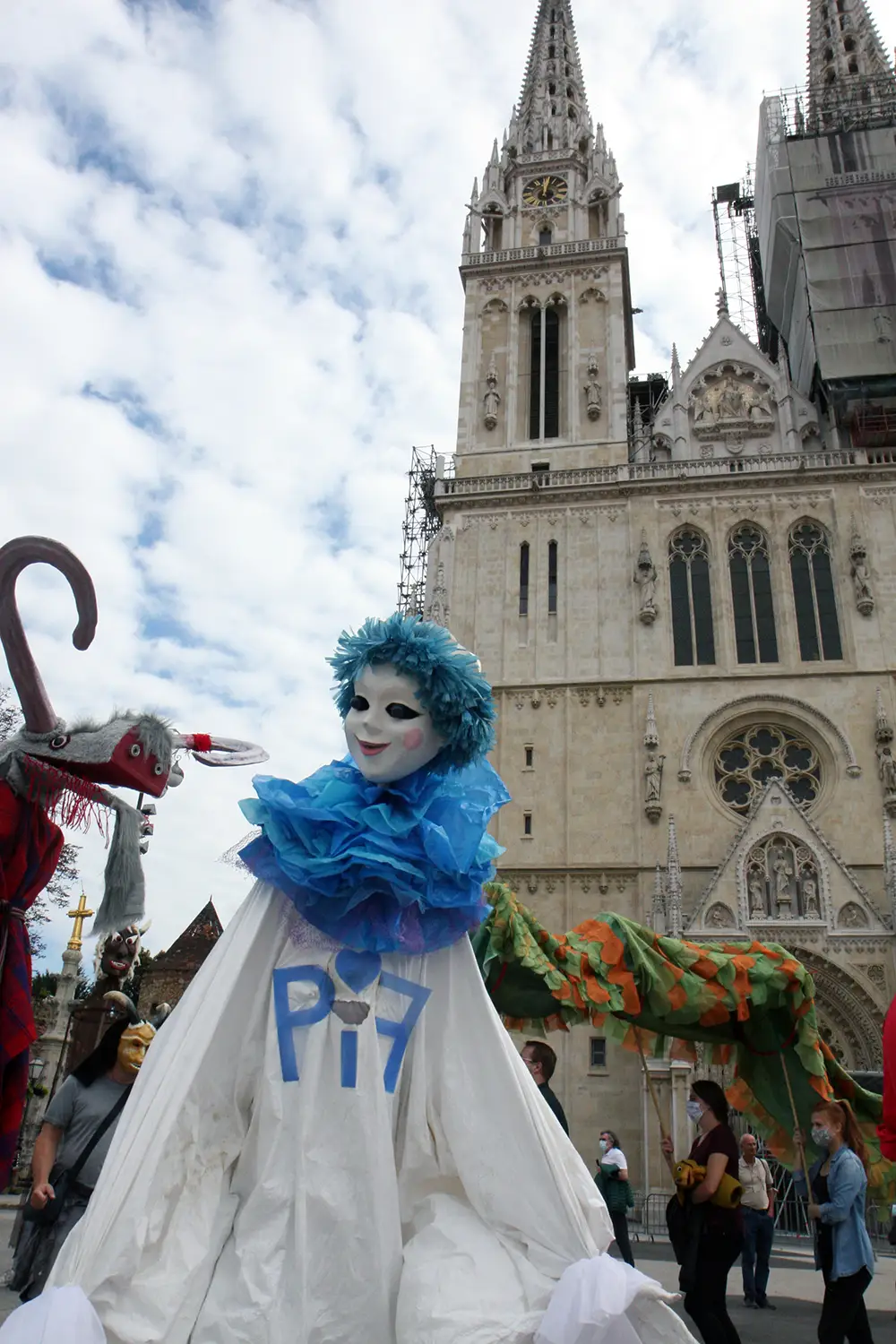
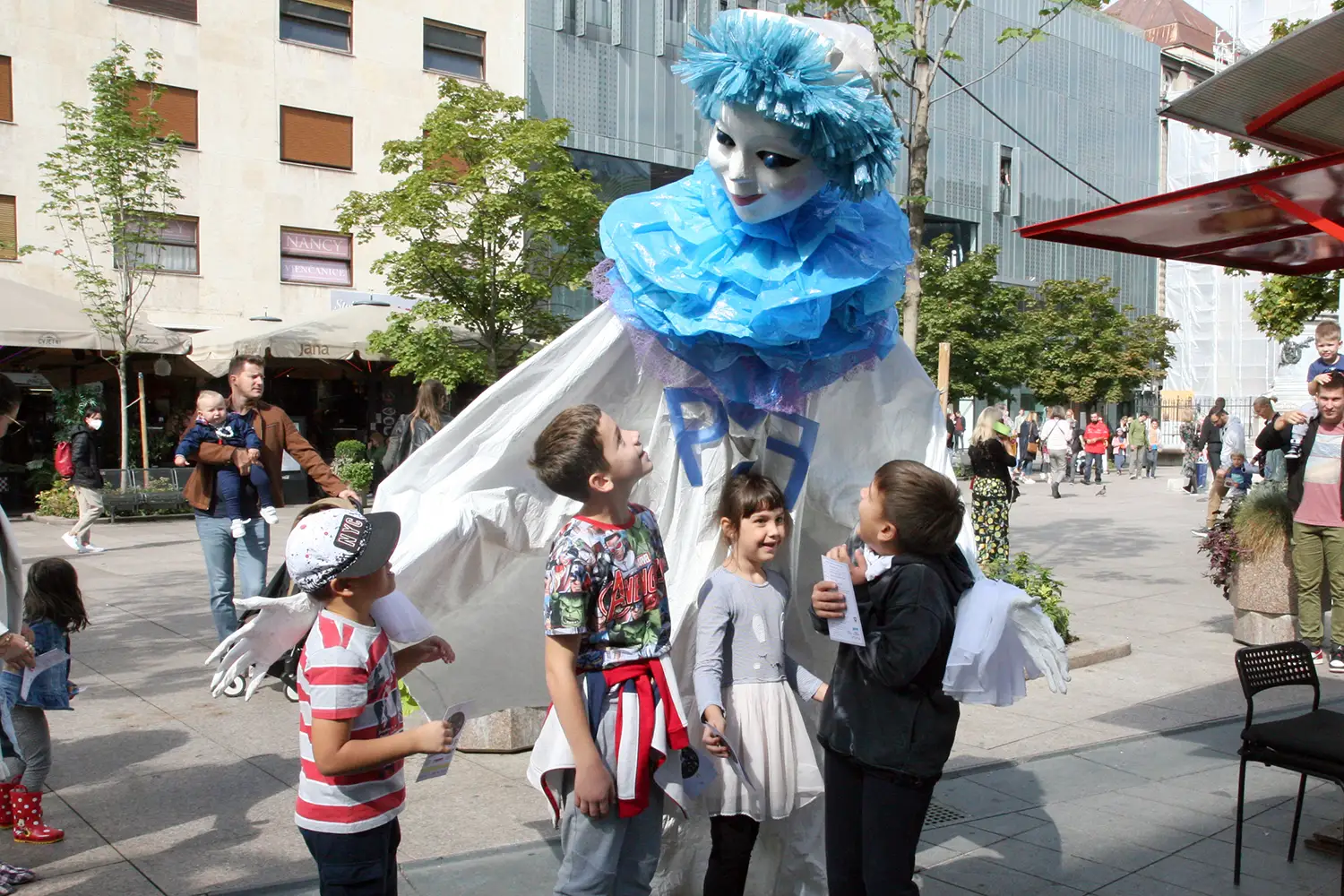
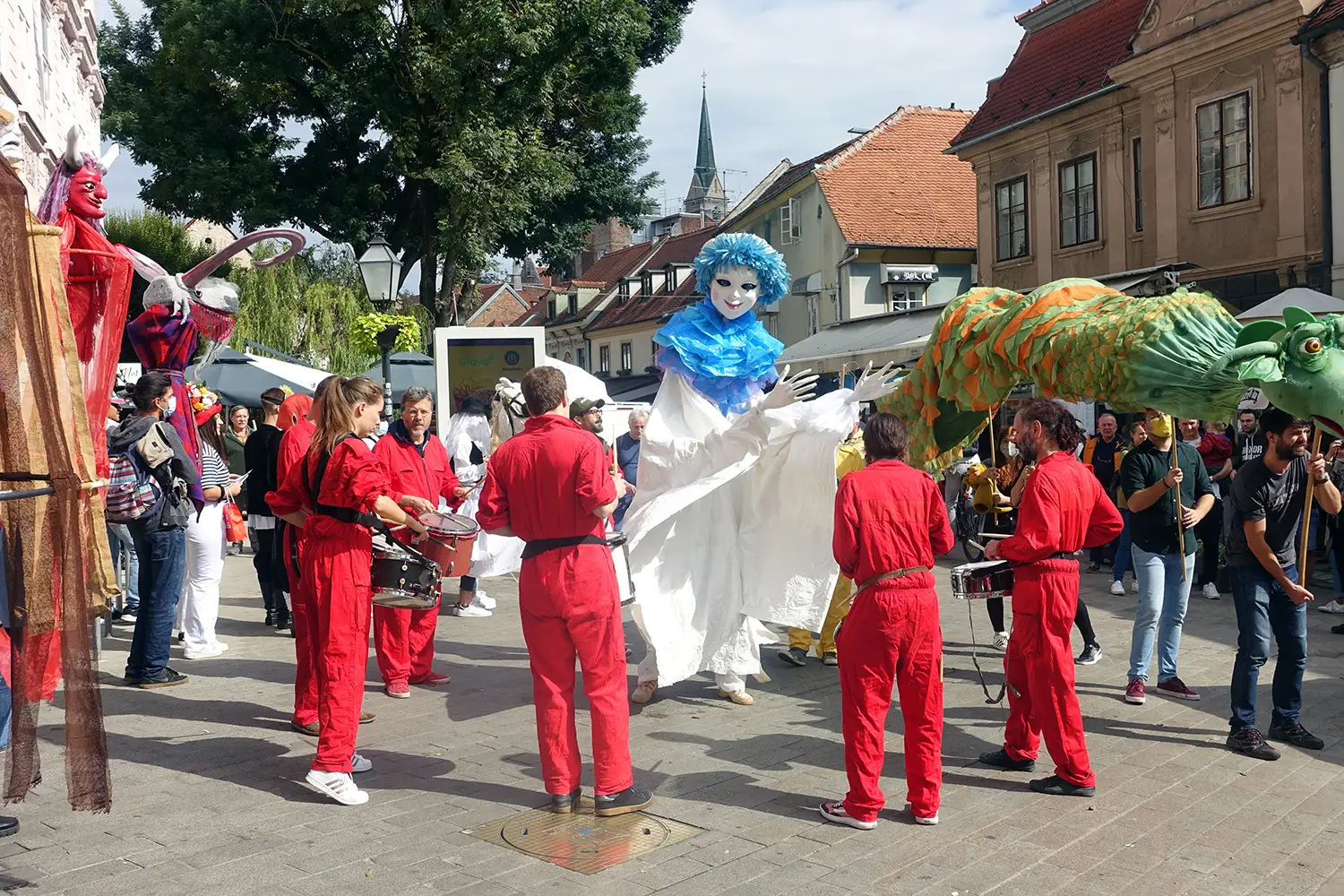
Along with the festival, special seminars are offered on the making of puppets and animation. Puppet exhibitions are also organized, as well as projections of puppetry films, promotions, and puppet exhibitions. The festival is opened by the mascot PIFko, a giant puppet who leads a merry procession of puppets and puppeteers.
The PIF’s worst moments were during the aggressive war against Croatia. Before the war the organisers had to try very hard to choose the best twenty out of some hundred theatres applying. In 1991 only a third of the planned programme remained. Organizers and audiences alike will always remember with gratitude the Swiss group Pannalal’s Puppets and three Slovenian puppet theatres that preserved the PIF’s international character by their courageous arrival in Zagreb in the middle of the war.
The main thrust of the PIF is to raise the level of puppet expression in all fields of the Festival. Keeping up with the contemporary tendencies in puppetry, not forgetting the tradition and peculiarity of different puppetry schools, is our guiding idea and requires constant organizational and program-based inquiry and improvement. PIF’s mission is to point at some new achievements and views on puppetry art to professional puppetry creators, as well as to audiences and puppetry lovers.
Međunarodni Festival kazališta lutaka
We firmly believe that the internet should be available and accessible to anyone, and are committed to providing a website that is accessible to the widest possible audience, regardless of circumstance and ability.
To fulfill this, we aim to adhere as strictly as possible to the World Wide Web Consortium’s (W3C) Web Content Accessibility Guidelines 2.1 (WCAG 2.1) at the AA level. These guidelines explain how to make web content accessible to people with a wide array of disabilities. Complying with those guidelines helps us ensure that the website is accessible to all people: blind people, people with motor impairments, visual impairment, cognitive disabilities, and more.
This website utilizes various technologies that are meant to make it as accessible as possible at all times. We utilize an accessibility interface that allows persons with specific disabilities to adjust the website’s UI (user interface) and design it to their personal needs.
Additionally, the website utilizes an AI-based application that runs in the background and optimizes its accessibility level constantly. This application remediates the website’s HTML, adapts Its functionality and behavior for screen-readers used by the blind users, and for keyboard functions used by individuals with motor impairments.
If you’ve found a malfunction or have ideas for improvement, we’ll be happy to hear from you. You can reach out to the website’s operators by using the following email
Our website implements the ARIA attributes (Accessible Rich Internet Applications) technique, alongside various different behavioral changes, to ensure blind users visiting with screen-readers are able to read, comprehend, and enjoy the website’s functions. As soon as a user with a screen-reader enters your site, they immediately receive a prompt to enter the Screen-Reader Profile so they can browse and operate your site effectively. Here’s how our website covers some of the most important screen-reader requirements, alongside console screenshots of code examples:
Screen-reader optimization: we run a background process that learns the website’s components from top to bottom, to ensure ongoing compliance even when updating the website. In this process, we provide screen-readers with meaningful data using the ARIA set of attributes. For example, we provide accurate form labels; descriptions for actionable icons (social media icons, search icons, cart icons, etc.); validation guidance for form inputs; element roles such as buttons, menus, modal dialogues (popups), and others. Additionally, the background process scans all the website’s images and provides an accurate and meaningful image-object-recognition-based description as an ALT (alternate text) tag for images that are not described. It will also extract texts that are embedded within the image, using an OCR (optical character recognition) technology. To turn on screen-reader adjustments at any time, users need only to press the Alt+1 keyboard combination. Screen-reader users also get automatic announcements to turn the Screen-reader mode on as soon as they enter the website.
These adjustments are compatible with all popular screen readers, including JAWS and NVDA.
Keyboard navigation optimization: The background process also adjusts the website’s HTML, and adds various behaviors using JavaScript code to make the website operable by the keyboard. This includes the ability to navigate the website using the Tab and Shift+Tab keys, operate dropdowns with the arrow keys, close them with Esc, trigger buttons and links using the Enter key, navigate between radio and checkbox elements using the arrow keys, and fill them in with the Spacebar or Enter key.Additionally, keyboard users will find quick-navigation and content-skip menus, available at any time by clicking Alt+1, or as the first elements of the site while navigating with the keyboard. The background process also handles triggered popups by moving the keyboard focus towards them as soon as they appear, and not allow the focus drift outside it.
Users can also use shortcuts such as “M” (menus), “H” (headings), “F” (forms), “B” (buttons), and “G” (graphics) to jump to specific elements.
We aim to support the widest array of browsers and assistive technologies as possible, so our users can choose the best fitting tools for them, with as few limitations as possible. Therefore, we have worked very hard to be able to support all major systems that comprise over 95% of the user market share including Google Chrome, Mozilla Firefox, Apple Safari, Opera and Microsoft Edge, JAWS and NVDA (screen readers).
Despite our very best efforts to allow anybody to adjust the website to their needs. There may still be pages or sections that are not fully accessible, are in the process of becoming accessible, or are lacking an adequate technological solution to make them accessible. Still, we are continually improving our accessibility, adding, updating and improving its options and features, and developing and adopting new technologies. All this is meant to reach the optimal level of accessibility, following technological advancements. For any assistance, please reach out to